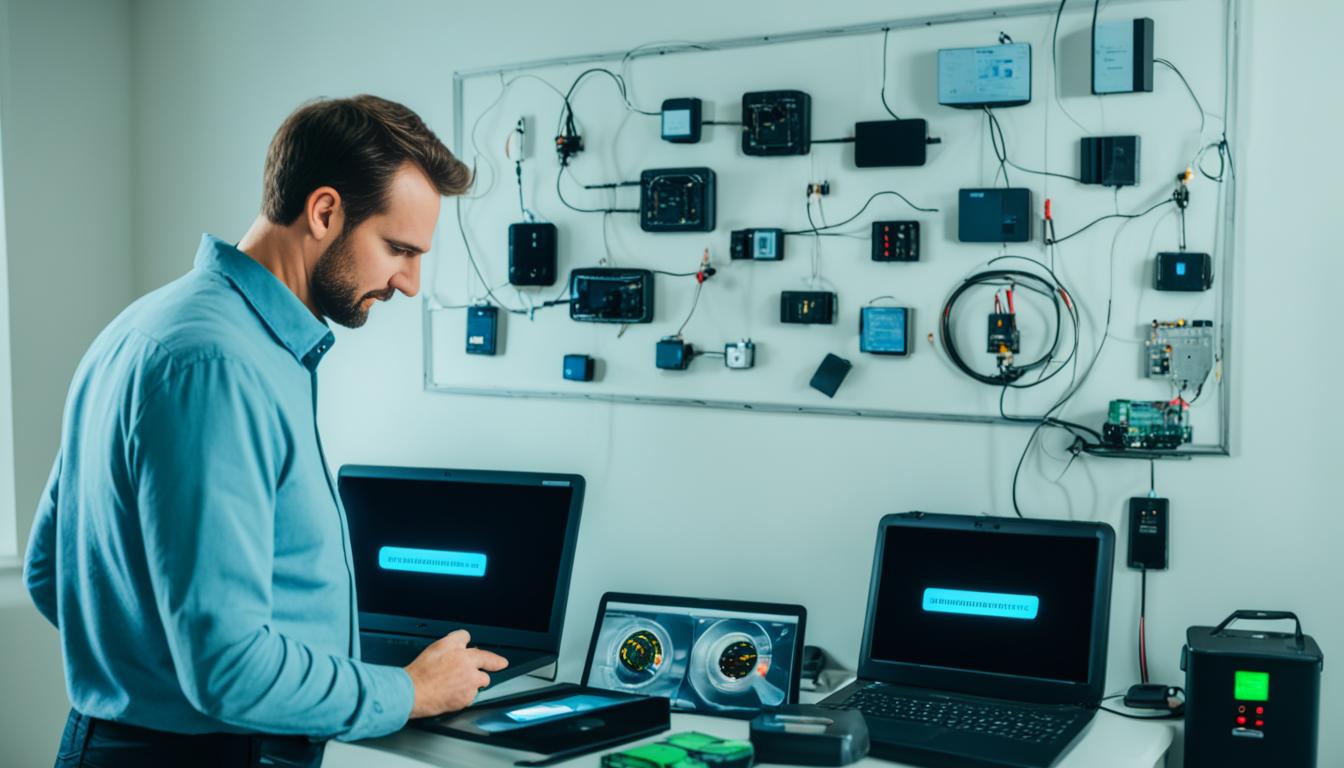
EMF Emissions The Devices And Technologies Behind Them come from countless sources we interact with daily, yet many people remain unaware of what actually generates these electromagnetic fields. From the smartphone in your pocket to the smart meter on your home, modern technology surrounds us with invisible energy that varies dramatically in strength and frequency.
Understanding which devices produce the strongest emissions helps you make informed decisions about your daily technology use. Some common household items generate surprisingly high EMF levels, while others pose minimal exposure risks.
TL;DR
- Cell phones emit 0.5-2 watts of RF radiation during calls, with levels dropping to nearly zero in airplane mode.
- Microwave ovens can leak up to 5 milliwatts per square centimeter at 2 inches from the door when operating.
- Smart meters transmit RF signals every 15-60 seconds, generating peak emissions of 1-10 watts for milliseconds at a time.
- Wi-Fi routers continuously emit 0.1 watts of RF radiation, with levels decreasing rapidly with distance from the device.
EMF Emissions The Devices And Technologies Behind Them
Every electronic device that uses electricity or wireless communication generates electromagnetic fields through different mechanisms. The type and strength of emissions depend on the device’s power consumption, frequency of operation, and intended function.
Modern homes contain dozens of EMF-emitting devices operating simultaneously on various frequencies. Identifying Common EMF Sources in Your Environment becomes essential for understanding your total exposure throughout the day.
Wireless Communication Devices
Devices that transmit and receive wireless signals produce the most significant RF emissions in most households. These technologies rely on radio frequency radiation to carry information through the air.
Cell Phones and Smartphones
Smartphones generate varying EMF levels depending on their current activity and signal strength. During phone calls, devices emit peak RF radiation levels as they maintain constant communication with cell towers.
- Call mode – Peak emissions of 0.5-2 watts when actively transmitting voice data.
- Data usage – Moderate emissions when streaming, browsing, or downloading content.
- Standby mode – Low but continuous emissions for maintaining network connection and receiving notifications.
- Airplane mode – Near-zero RF emissions with all wireless radios disabled.
Wi-Fi Routers and Access Points
Home Wi-Fi systems emit continuous RF radiation to maintain network coverage throughout your living space. Modern routers often broadcast on multiple frequencies simultaneously to support different devices and speeds.
Router emissions remain relatively constant regardless of network activity, as the device must always be ready to communicate with connected devices. Newer mesh systems create additional emission points throughout the home to extend coverage areas.
Bluetooth Devices
Bluetooth technology uses lower power levels than Wi-Fi but creates frequent emission pulses during active connections. Wireless headphones, speakers, and smart home devices all contribute to your overall RF exposure.
These devices typically emit power levels under 10 milliwatts, significantly lower than cell phones or Wi-Fi routers. However, their close proximity to your body during use can result in higher localized exposure levels.
Household Appliances and Electronics
Common household appliances generate EMF emissions through their electrical components and motors. Understanding these sources helps you make informed decisions about appliance placement and usage patterns.
Microwave Ovens
Microwave ovens produce some of the strongest EMF emissions in typical homes, operating at 2.45 GHz with power levels around 700-1000 watts. Proper shielding contains most emissions, but some leakage occurs around door seals and vents.
Federal regulations limit microwave leakage to 5 milliwatts per square centimeter at 2 inches from the oven surface. Older units may exceed these limits due to worn door seals or damaged shielding components.
Television and Entertainment Systems
Modern televisions emit EMFs through their power supplies, processing circuits, and wireless connectivity features. Smart TVs generate additional RF emissions when connected to Wi-Fi networks or streaming services.
- Power supply emissions. Switch-mode power supplies create high-frequency electrical noise that radiates from the TV.
- Display technology effects. LCD and OLED screens generate different EMF patterns compared to older CRT televisions.
- Wireless connectivity. Built-in Wi-Fi and Bluetooth radios add RF emissions to the overall EMF footprint.
Distance Matters Most
EMF exposure levels drop dramatically with distance from the source. Doubling your distance from any EMF-emitting device typically reduces exposure by 75% or more.
Smart Home and IoT Devices
The Internet of Things revolution has introduced numerous new EMF sources into modern homes. These devices often emit RF signals continuously to maintain connectivity and respond to remote commands.
Smart Meters
Utility smart meters transmit usage data through RF signals, typically every 15-60 seconds throughout the day. Peak transmission power ranges from 1-10 watts, but actual transmission time is usually under one second per event.
These meters communicate with utility companies using various frequencies including 900 MHz, 2.4 GHz, and cellular networks. Where EMFs Lurk: Recognizing Hidden Sources in Daily Life includes detailed information about smart meter placement and exposure patterns.
Voice Assistants and Smart Speakers
Amazon Echo, Google Home, and similar devices maintain constant Wi-Fi connections while listening for wake words. This creates continuous low-level RF emissions plus periodic higher-power transmissions during active use.
Many smart speakers also include Bluetooth radios for audio streaming, adding another layer of RF emissions to your environment. Some models feature multiple microphones and speakers that each contribute to the overall EMF footprint.
Computing and Office Equipment
Computers, printers, and office equipment generate EMFs through their power supplies, processors, and wireless connectivity features. Modern devices often include multiple radio systems for different types of connectivity.
Laptops and Desktop Computers
Computer EMF emissions come from several sources operating simultaneously within the same device. Power consumption and emission levels vary significantly based on current processing demands and active wireless connections.
- Processing units – CPU and GPU generate electrical noise during operation.
- Power supplies – Switch-mode designs create high-frequency emissions.
- Wireless radios – Wi-Fi, Bluetooth, and cellular modems add RF emissions.
- Display systems – Backlight inverters and display drivers contribute additional EMF sources.
Wireless Printers and Scanners
Network-enabled printers emit RF signals even when not actively printing to maintain connectivity with computers and mobile devices. These devices often support multiple wireless protocols simultaneously.
Print jobs trigger increased EMF emissions from motors, heating elements, and data processing circuits. Inkjet and laser printers create different EMF patterns due to their distinct printing technologies and power requirements.
Industrial and Commercial EMF Sources
Beyond household devices, industrial equipment and infrastructure create significant EMF emissions that affect entire neighborhoods. Understanding these sources helps explain elevated readings in certain locations.
Cell Towers and Base Stations
Cellular infrastructure operates at much higher power levels than consumer devices, transmitting signals across miles rather than feet. Tower emissions vary based on carrier, technology (3G, 4G, 5G), and current network demand.
Base station antennas focus their energy toward the horizon rather than ground level, but nearby residents may still experience elevated RF exposure. Everyday Sources of EMFs: From Microwaves to Power Lines provides detailed information about these infrastructure sources.
Power Lines and Electrical Infrastructure
High-voltage power lines generate extremely low frequency (ELF) magnetic fields rather than the RF emissions produced by wireless devices. These fields extend significant distances from transmission lines and electrical substations.
Electrical infrastructure EMF levels depend on current load, voltage levels, and conductor configuration. Underground power lines typically produce lower EMF levels than overhead installations due to different cable arrangements.
Frequently Asked Questions
Which household devices produce the strongest EMF emissions?
Microwave ovens, cell phones during calls, and Wi-Fi routers typically generate the highest EMF levels in homes, though emissions vary significantly based on usage patterns and proximity to the device.
Do smart home devices increase total EMF exposure?
Yes, smart home devices add multiple new RF sources to your environment, though individual device emissions are often lower than cell phones or Wi-Fi routers.
How can I measure EMF emissions from my devices?
EMF meters designed for different frequency ranges can measure emissions from various devices, with RF meters for wireless devices and ELF meters for power line frequencies.
Do newer devices emit more or less EMF than older models?
Newer devices often emit more RF radiation due to additional wireless features, but improved efficiency sometimes reduces overall power consumption and associated emissions.
Final Thoughts
EMF Emissions The Devices And Technologies Behind Them represent a complex mix of wireless communications, electrical systems, and smart technology integration. Understanding which devices contribute most to your daily exposure helps you make informed decisions about technology use and placement.
Start by measuring EMF levels around your most frequently used devices and consider simple steps for reducing exposure where practical without sacrificing functionality.


The information on this website is for general purposes only and is not a substitute for professional financial advice.
Always consult a financial professional before making decisions.